Binairo vs Sudoku: Which Logic Puzzle Should You Play?
If you enjoy Sudoku, sooner or later you'll want a puzzle that scratches the same itch in a different way. Binairo, also known as Takuzu or the Binary Puzzle, is one of the best places to go next. Both are pure logic: no maths, no luck and one correct answer. But they feel surprisingly different to solve.
Here's how they compare, and how to choose. You can play both for free on PixelsMaya: Fruit Binairo and Zen Haven Sudoku.
The rules, side by side
| Sudoku | Binairo (Takuzu) | |
|---|---|---|
| Grid | 9×9, split into nine 3×3 boxes | Even sizes: 6×6, 8×8, 10×10 |
| Symbols | Nine (the digits 1 to 9) | Two (0 and 1, or 🍊 and 🍎 in Fruit Binairo) |
| Rule 1 | Each row has every digit once | No three of the same symbol in a row, across or down |
| Rule 2 | Each column has every digit once | Every row and column has equal numbers of each symbol |
| Rule 3 | Each 3×3 box has every digit once | No two rows, and no two columns, are identical |
| Solutions | One per puzzle | One per puzzle |
| Guessing needed? | No | No |
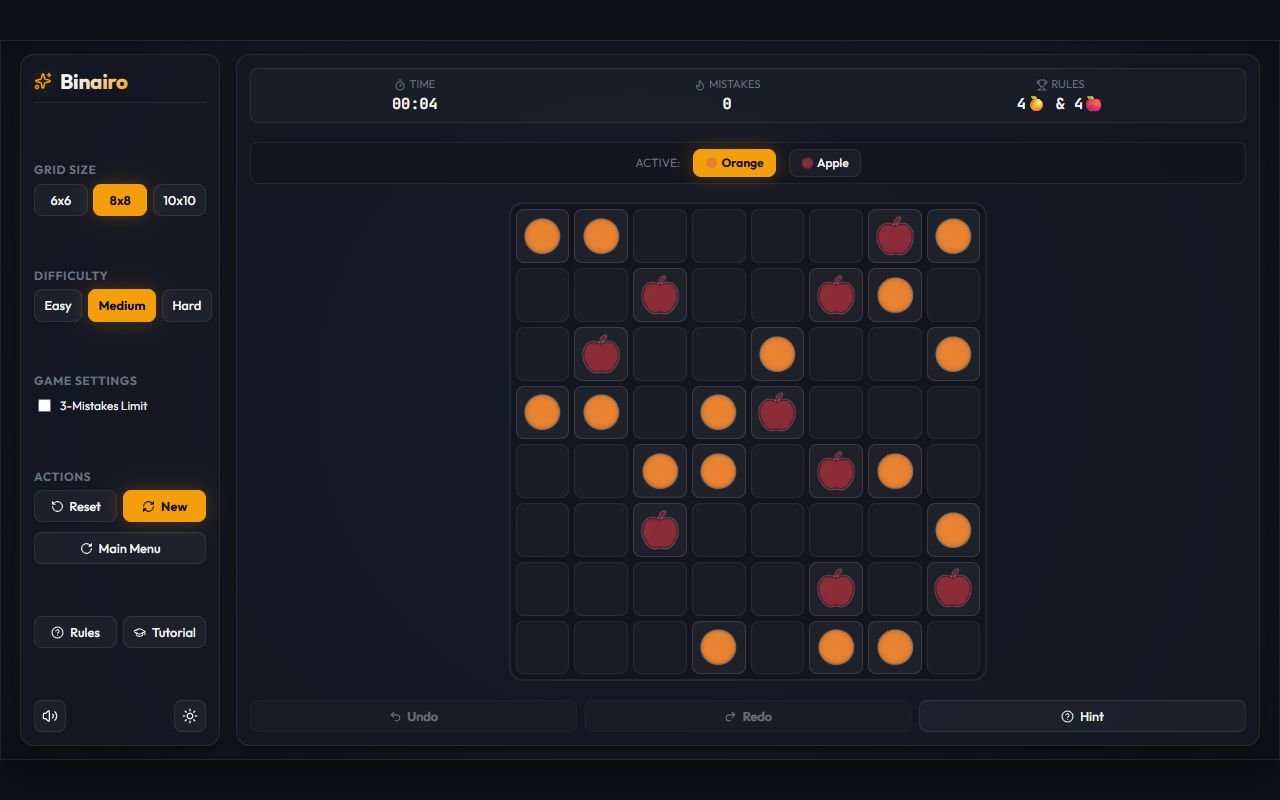
Both puzzles have three rules, but they work in opposite ways. Sudoku is about variety: nine symbols, each used exactly once per group. Binairo is about balance and pattern: only two symbols, so every cell is a yes-or-no question, and the challenge is spotting which answer the rules force.
How solving feels different
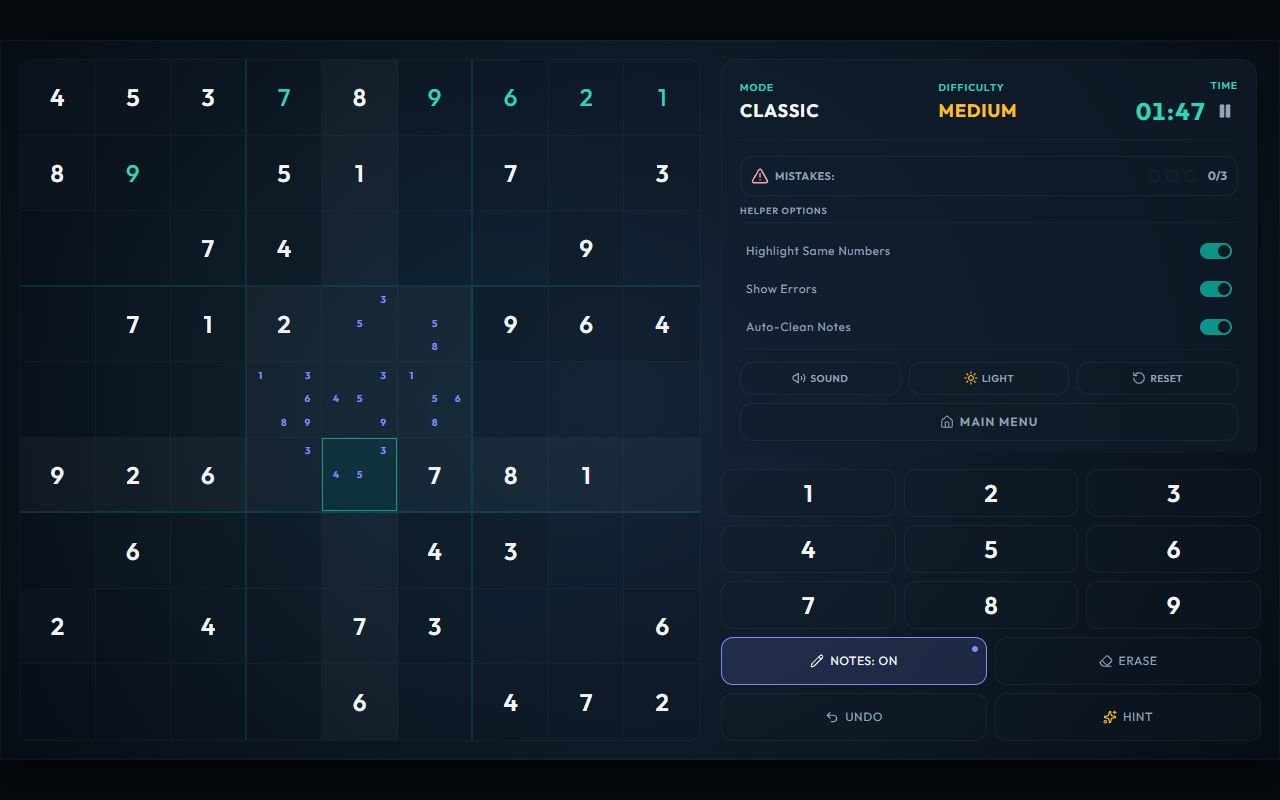
Sudoku is about candidates. In each empty cell, several digits might fit. You narrow them down by checking the row, the column and the box. Harder puzzles ask you to track many candidates at once, with techniques like naked pairs and X-wings.
Binairo is about patterns. With only two choices per cell, there's nothing to note down. Instead you scan for shapes: two of the same fruit side by side (both ends must be the other fruit), a gap between two matching fruits (the gap must be the other fruit), and lines that already have half of one fruit. It's faster and more visual, and on big grids you get long chains where one move unlocks the next.
The third rule is the twist. "No identical rows or columns" has no equivalent in Sudoku. It looks at the whole grid at once and often decides the last few cells of a hard Binairo.
Which is harder?
It depends on the puzzle, not the type. An Easy Binairo is easier than a Hard Sudoku and the other way round. Roughly:
- To learn: Binairo is quicker. Two symbols and three rules, and most people solve their first 6×6 in a few minutes.
- To master: both go deep. Hard Sudokus need advanced candidate techniques. Hard 10×10 Binairos need counting tricks and thinking a few moves ahead. Our advanced Binairo strategy guide covers those.
- Time per puzzle: a 6×6 Binairo is shorter than most Sudokus, which makes it a great quick break. A Hard 10×10 can take as long as a tough Sudoku.
Which one should you play?
Choose Binairo if you:
- want a puzzle you can learn in two minutes,
- like spotting visual patterns more than tracking numbers,
- prefer short games you can finish on a coffee break,
- have played so much Sudoku that the techniques feel automatic.
Choose Sudoku if you:
- enjoy working with numbers and candidates,
- like a fixed, familiar 9×9 grid,
- want a long, calm puzzle to settle into.
Or play both. They train slightly different skills: Sudoku builds systematic elimination, and Binairo builds pattern spotting and counting. Switching between them keeps both feeling fresh.
Try them both
- Fruit Binairo: the binary puzzle with oranges and apples. Grids from 6×6 to 10×10, three difficulties, an interactive tutorial, undo and hints. New to it? Read how to play Binairo.
- Zen Haven Sudoku: a calm 9×9 Sudoku with four difficulty levels, hints, a dark mode and auto-save.
Both are free in your browser on a computer, a phone or a tablet, with no download and no sign-up.